
Book Review - Screen Deep: How Film And TV Can Solve Racism And Save The World By Ellen E. Jones
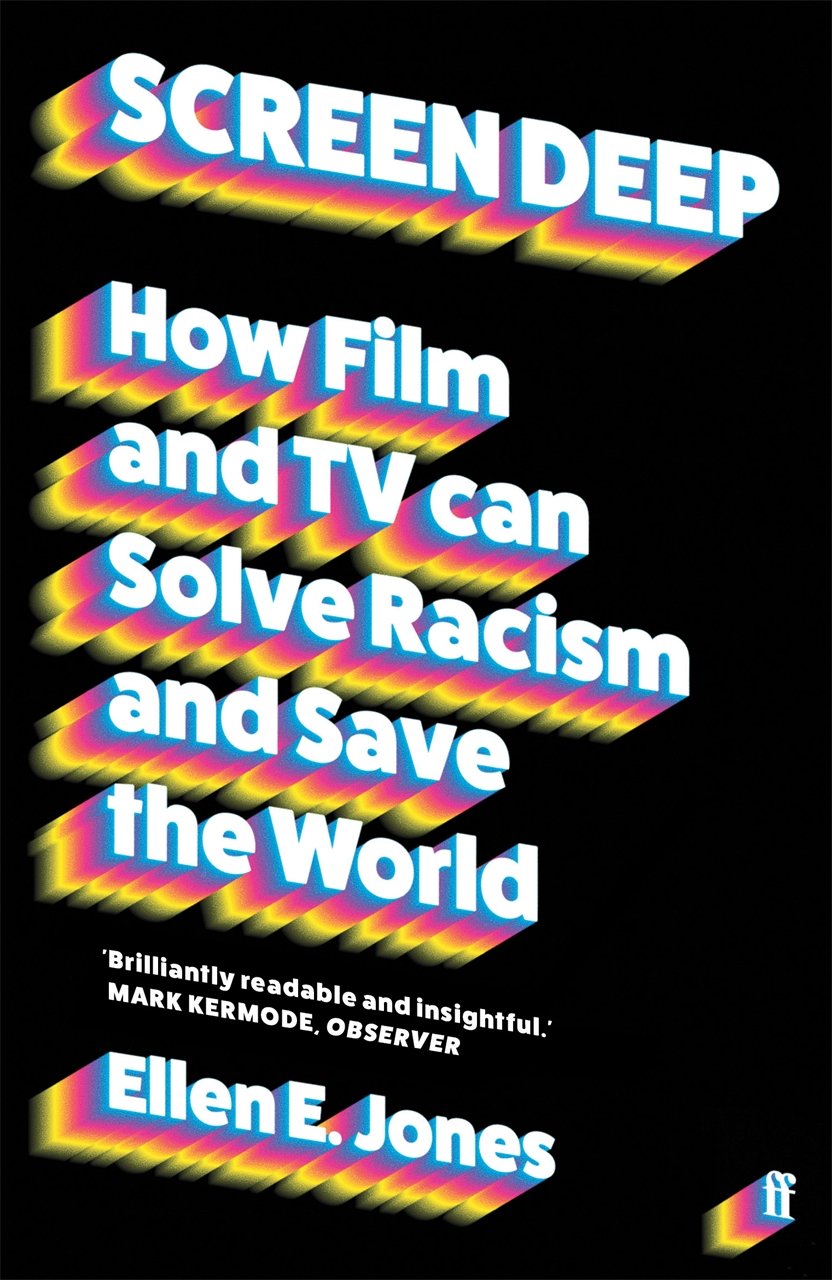
I’m a massive nerd of epic proportions with a deep love of TV, film, comics, video games, books and all things sci-fi fantasy. So much so that I once reviewed a book purely because the title was a Dragon Ball Z reference. Similarly, I’ve found another book which I chose to read and review for this article with no knowledge beyond the title. That book (as you could probably guess from the top of this page) is Screen Deep: How Film And TV Can Solve Racism And Save The World by Ellen E. Jones. That title might be a little hyperbolic but ever since I was a teenager and first noticed the parallels between Professor X and Magneto from the X-men with Martin Luther King Jr and Malcolm X I have been a believer in the importance of representation, and of the power of media in all its forms to affect and promote greater equality. As I got older, I learned more and of course realised there were some problematic issues with using primarily white characters as stand ins for America’s civil rights movement, but it was pretty progressive by the standards of the times. Based on this book, Jones has similar views regarding TV and film as vehicles for activism.
At the core of this book Jones’ argument is that film and TV can be powerful tools for social change. As she puts it herself in the book’s introduction “Arguments, or debates, are much more likely to further entrench a person in their position. It is only emotion and empathy – most powerfully evoked by storytelling – that can change a person’s mind.” According to Jones, diversity in casting or production is not the endpoint of anti-racist action but a starting point for deeper engagement. She pushes beyond the shortsighted but reassuring (especially to certain white people) view that we have more people of colour on screen now so that box is ticked and representation has been achieved. Job done, don’t have to worry about it anymore. Instead, she asks the harder questions like what kinds of stories are being told? What kind of stories aren’t being told? Whose humanity is central? ……And whose perspective remains marginalised even when superficially included?
In this respect Jones challenges complacency, particularly a certain kind of (white) complacency, and demonstrates how easy it is to mistake visibility for progress. The idea is it is not just the stories themselves which are important, but who tells them, and who decides what stories get told. I for one agree. As far as I’m concerned, films and TV shows are not just a reflection of the times they are made in, but can play an instrumental role in building them. Stories have mattered ever since the first cavemen sat around a fire and told tales about how they almost got killed by a wolf earlier that day, “you should’ve seen him ogg, I’m telling you he was massive, an absolute unit”. Stories shape empathy, identity, and our collective imagination, they are the fuel that powers entire national identities. Just look at how much of Britain’s national identity has been wrapped in stories about World War 2 despite it happening more than eighty years ago now.
Jones herself is a journalist, broadcaster, as well as a film and TV critic and brings more than 20 years of experience, and a wealth of knowledge to this book. The scope of her examination of the film and TV industries spans fourteen chapters each covering a different genre or topic including horror, westerns, romance, sitcoms, superhero films, period dramas, and crime thrillers to name but a few. Throughout all of these chapters, Jones’ writing style remains approachable and accessible while retaining a sharp and incisive edge when needed. She focuses on a varied list of both older films like Look Who’s Coming To Dinner, or West Side Story as well as more recent fare like Black Panther in the chapter on superhero films or Get Out and Candyman in her horror chapter.
Not to be limited to analysing different genres she also includes a brief history of people of colour in film and TV, and the legacy of blackface and minstrelsy in its various forms. These sections did make for uncomfortable reading at times, especially the chapter on blackface, as Jones points out not just how harmful it is as a practice, but how recently it has still plagued our screens in shows like Little Britain or Bo’ Selecta despite most of society seemingly agreeing that blackface is racist decades ago. I came away from this chapter in particular re-assessing TV shows and films I have watched in the past through a more critical lens than I had before and determined to apply this view to what I watch going forward.
While parts of Screen Deep were uncomfortable, it has still overall been a good read as far as I am concerned, not just because of how it has made me take a deeper look at film and TV, but because it has let me tap into a goldmine of new films that I’ve never seen before. For every film or show Jones wrote about that I’ve seen, she mentioned one that I’d either never seen or hadn’t even heard of. With past reviews I’ve stopped reading to check something I was unfamiliar with here and there but this has been the most times I’ve had to stop and quickly google a film or show to learn more, and then to see if its available to stream only to be disappointed that its only on BFI player and I can’t afford any more subscriptions (Welcome II The Terrordome I’m looking at you). Jones might focus mainly on British and American film and TV but she also makes space to write about indigenous films which I was completely unaware of. My knowledge of Australian film is limited to parts of The Adventures of Priscilla, Queen of the Desert that I half remember from that one time I watched it more than ten years ago. Through Screen Deep, Jones has introduced me to a handful of indigenous shows and films, most notably The Drover’s Wife whose director, Leah Purcell, is featured in the book in an interview with Jones.
To conclude this piece, the main question to answer would be do I recommend this book for others to read? The answer is an easy yes. To give a quick look behind the curtain so to speak, normally when I write these reviews it is a long process involving being stuck staring at a blank screen in frustration because I know what I want to say in my head but can’t find the right words. While it still took a while this, has been the fastest and smoothest review I’ve written so far. I’ve enjoyed this book so much that the thoughts have come together and formed into words far faster than for any other book I’ve reviewed, so much faster that I even felt it necessary to include the fact here. I would recommend this book to be read by as many people as possible but especially people who love film and TV and maybe want to take a closer look at how genre conventions can shape our views. Ultimately Screen Deep is an enjoyable, serious, and deep exploration of the ways film and TV can be part of anti-racist work. It reframes conversations about race and representation, urging readers to see how if used well, and if the gates are opened up to more people, film and TV can contribute in the fight against racism and other forms of hate.
To buy this book for yourself, please click here: https://tinyurl.com/2s38a7nj